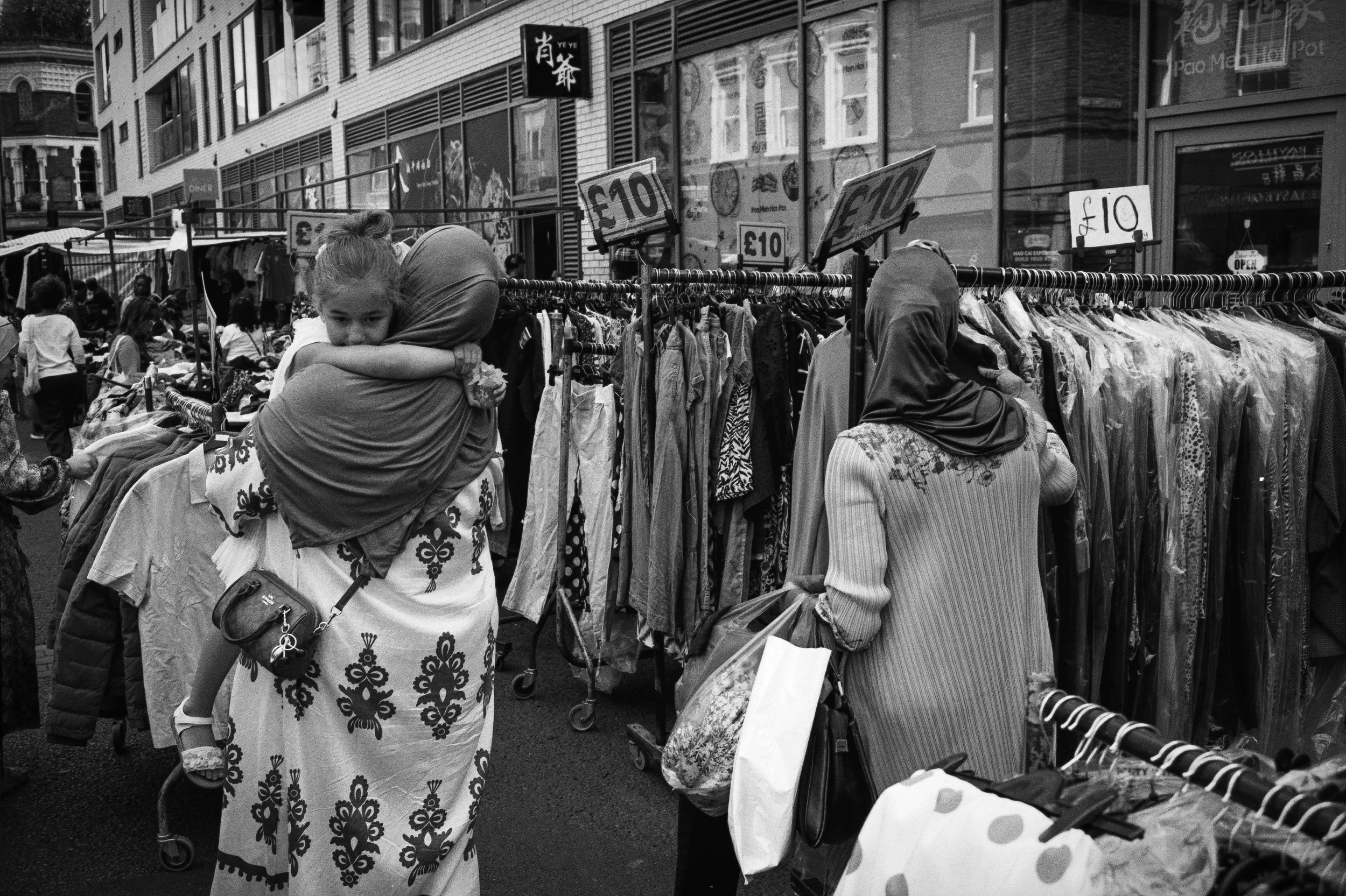
Petticoat Lane : A Tradition of Enterprise
For centuries, Petticoat Lane has been shaped not by its buildings but by its people. Every generation has brought new faces, new languages and new traditions, yet the market has remained a place where livelihoods are created through conversation, hard work and an instinct for trade. Long before the surrounding skyline filled with glass towers, these streets echoed with traders calling to customers, friendships formed across market stalls and families working together to build a future in the East End.
The market emerged during the seventeenth century, taking its name from the second-hand clothing and petticoats once sold along its narrow streets. Although the main thoroughfare became officially known as Middlesex Street during the nineteenth century, Londoners never abandoned the older name. It endured because the market had become far more than a destination for bargains. It was a meeting place where London's working people gathered each week, where news travelled as quickly as goods, and where newcomers discovered both opportunity and community.
Among those newcomers were thousands of Jewish immigrants escaping persecution and poverty in Eastern Europe. Many settled in the surrounding streets, bringing with them skills in tailoring, textile trading and small business. Market stalls often became the first step towards economic security, supporting families whose children would go on to shape the life of London far beyond the East End. Petticoat Lane became a place where enterprise and identity were inseparable, reflecting the resilience of a community determined to build a new life.
As the twentieth century unfolded, the character of the market continued to change with the neighbourhood around it. Many Jewish families moved to other parts of London, while new arrivals from Bangladesh, South Asia, Africa, Turkey, the Middle East and Eastern Europe brought fresh energy to the surrounding streets. Their cultures, languages and traditions blended into the everyday life of the market, ensuring that Petticoat Lane continued to reflect the changing face of London itself.
Today, the market remains one of the city's great meeting places. On Sundays, traders greet long-standing customers by name while first-time visitors wander between stalls searching for clothing, fabrics, jewellery, household goods and street food. Bargaining remains part of the experience, but so too does conversation. English mixes effortlessly with Bengali, Arabic, Turkish, Polish and many other languages, creating an atmosphere that is unmistakably East London. Buyers and sellers come from every background, yet for a few hours they share the same streets, drawn together by commerce and curiosity.
Petticoat Lane has survived changing fashions, economic uncertainty and the pressures of regeneration because it has always been sustained by people rather than products. It remains a place where opportunity is measured not only in profit but in relationships, where newcomers continue to find their footing, and where generations of Londoners have discovered that a market can be much more than a place to shop. It is a living reminder that the East End has always been built through the energy, resilience and enterprise of those who came here in search of a better future.
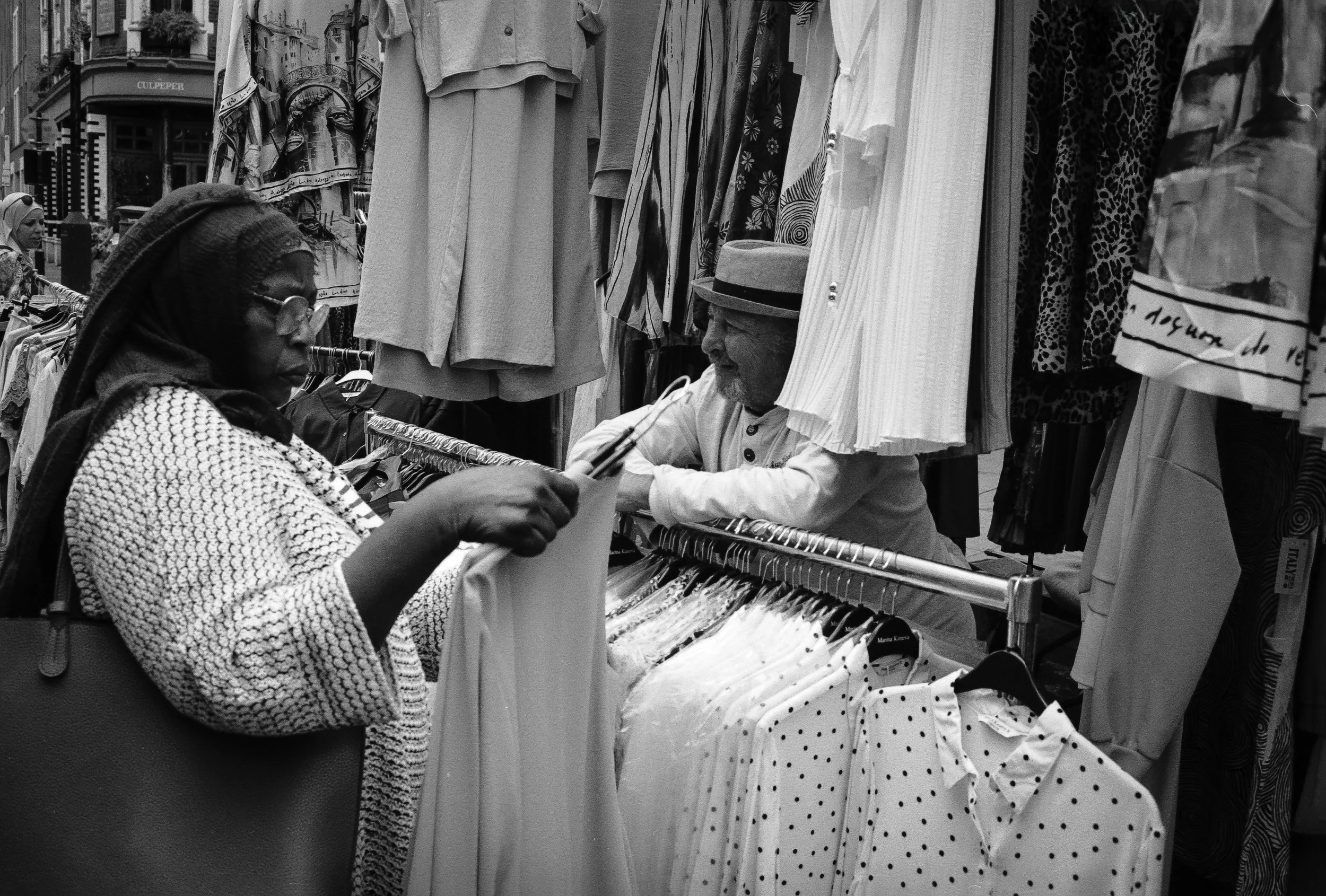
CHOOSING : Brick Lane, July 2026. OM2 | TMax 400 (rated 640) | 35mm at f11
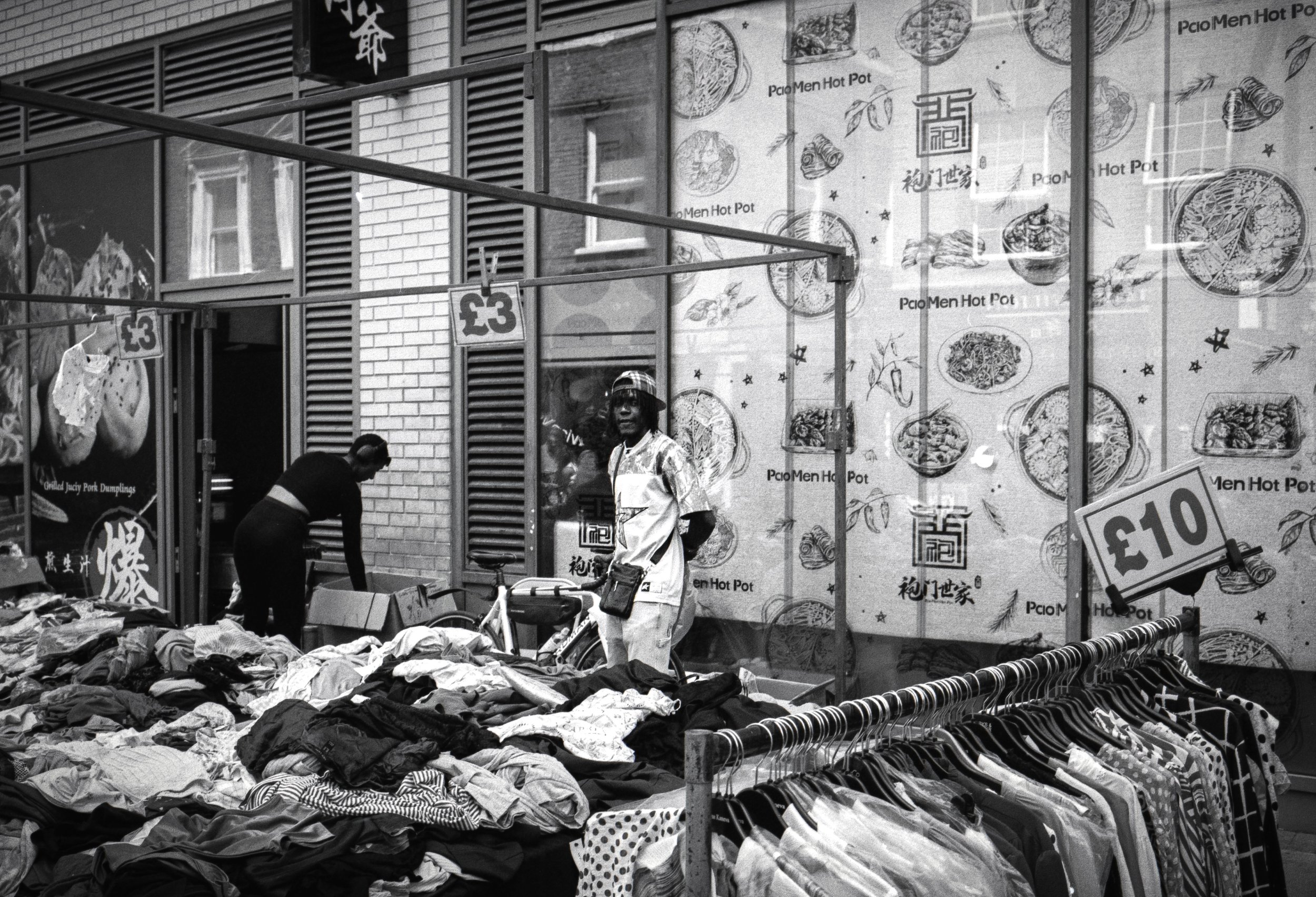
STANDING BY THE WALL : Brick Lane, July 2026. OM2 | TMax 400 (rated 640) | 35mm at f11
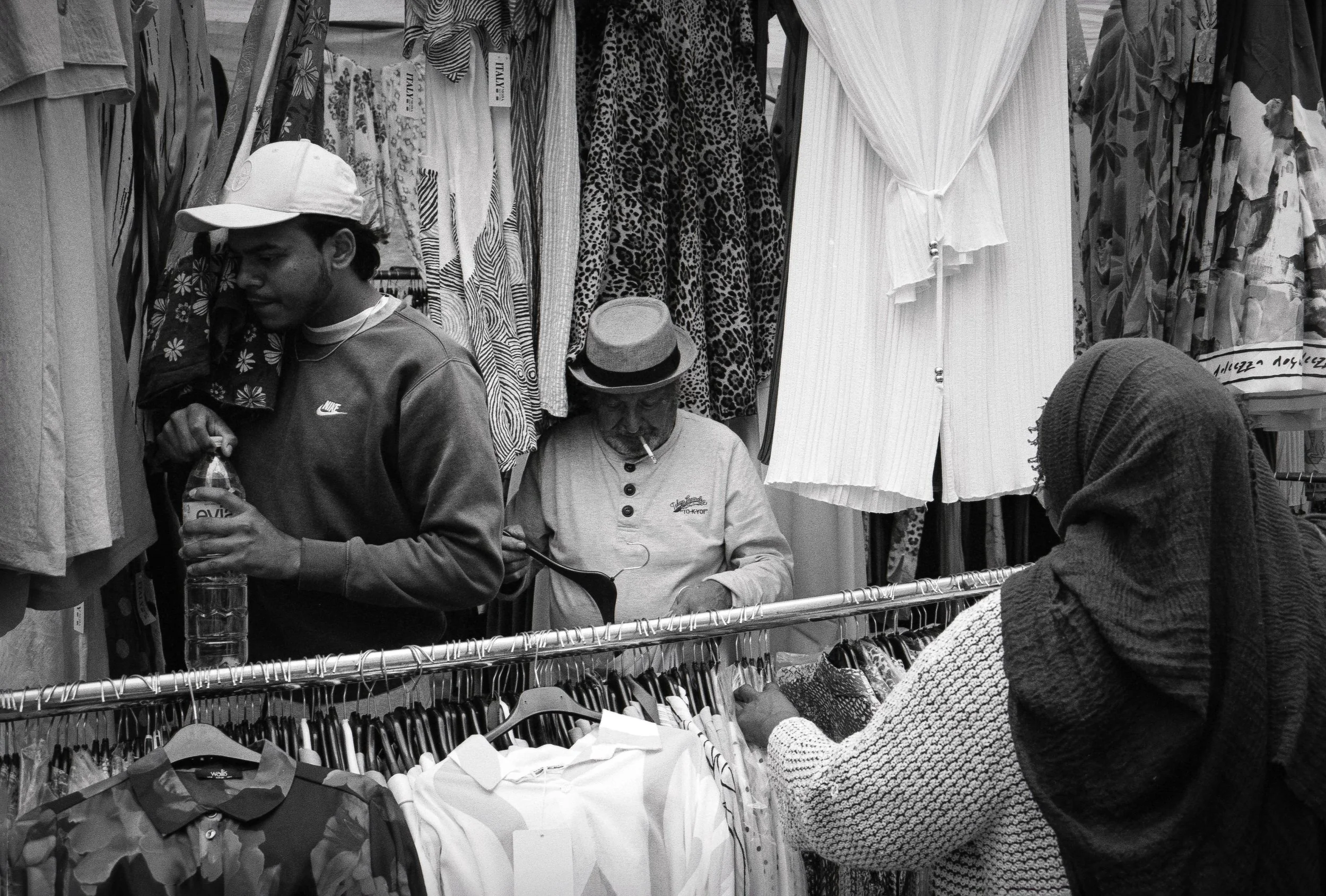
ASLEEP : Brick Lane, July 2026. OM2 | TMax 400 (rated 640) | 50mm at f5.6
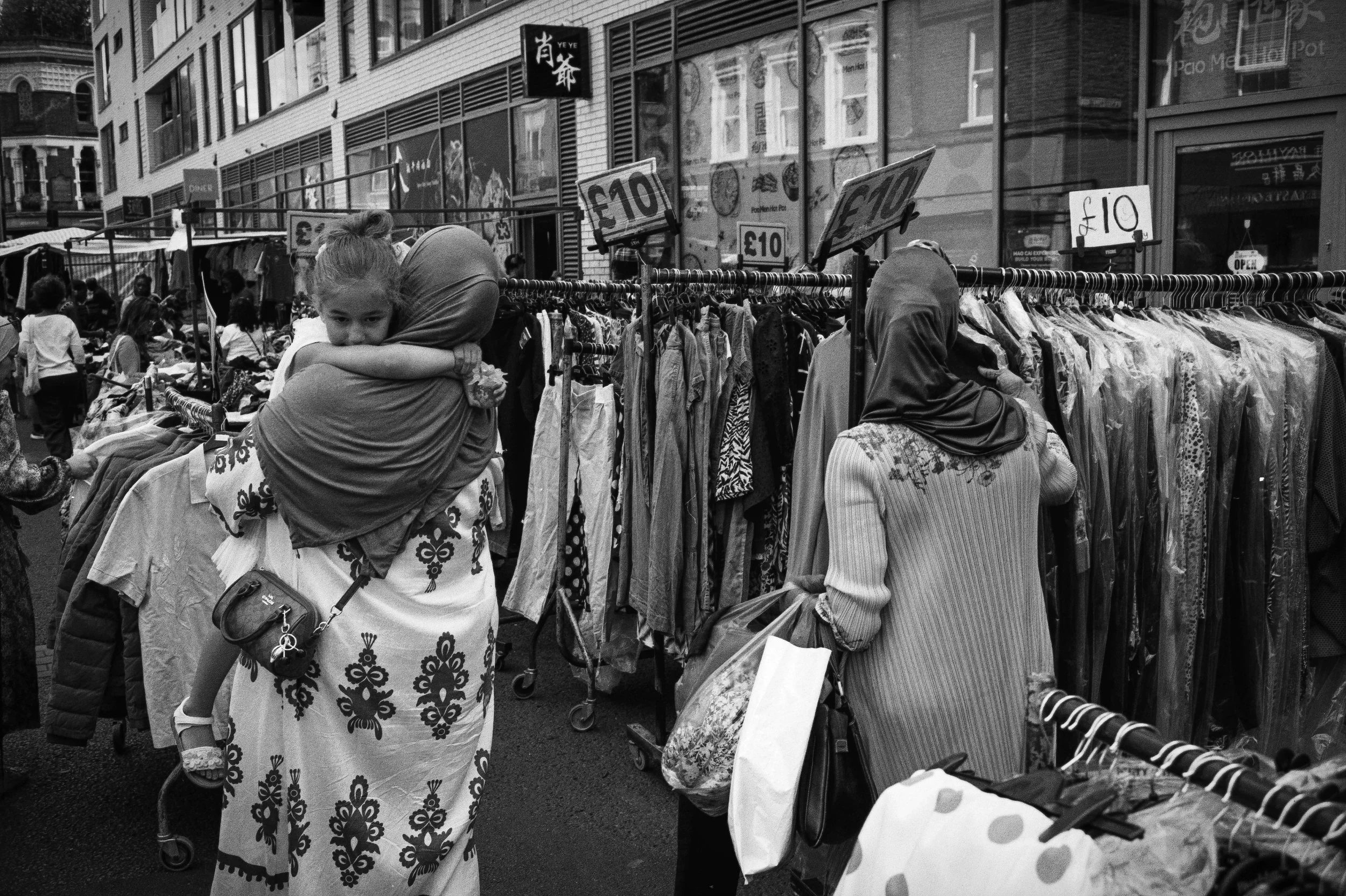
CARRYING CHILD : Brick Lane, July 2026. OM2 | TMax 400 (rated 640) | 35mm at f11